Now Delivering Regenerative beef & lamb, cut to order as our on-farm butchery ramps up — frozen delivery across the North Island. Order now

About our meat

Raised in alignment with nature.

Beef and lamb grown beside the Mangaroa River by people with deep connection to the land — then processed right here, not shipped through an anonymous supply chain.

Our way

Born & grazed in alignment with nature.

Mangaroa Farms livestock are raised naturally with care. We start with high-quality genetics — like Angus beef — then nurture them on lush, diverse pasture, free from stress, added hormones, GMOs and antibiotics. We're a breeding-finishing unit, so our cattle and sheep spend their whole lives here on the farm.

Grass-fed, pasture-grazed

Our focus is on nurturing biodiverse, living soil. That creates rich, nutritional grass for our animals to graze.

Regenerative principles

Our livestock are raised with ecology as a first principle — nurturing land, air and all living beings through our actions.

No synthetic inputs

We work in harmony with nature and choose not to expose our cattle and sheep to added hormones, GMOs or antibiotics.

Happy, healthy animals

A low-stress environment lets our livestock grow to their fullest potential — better lives, better meat.

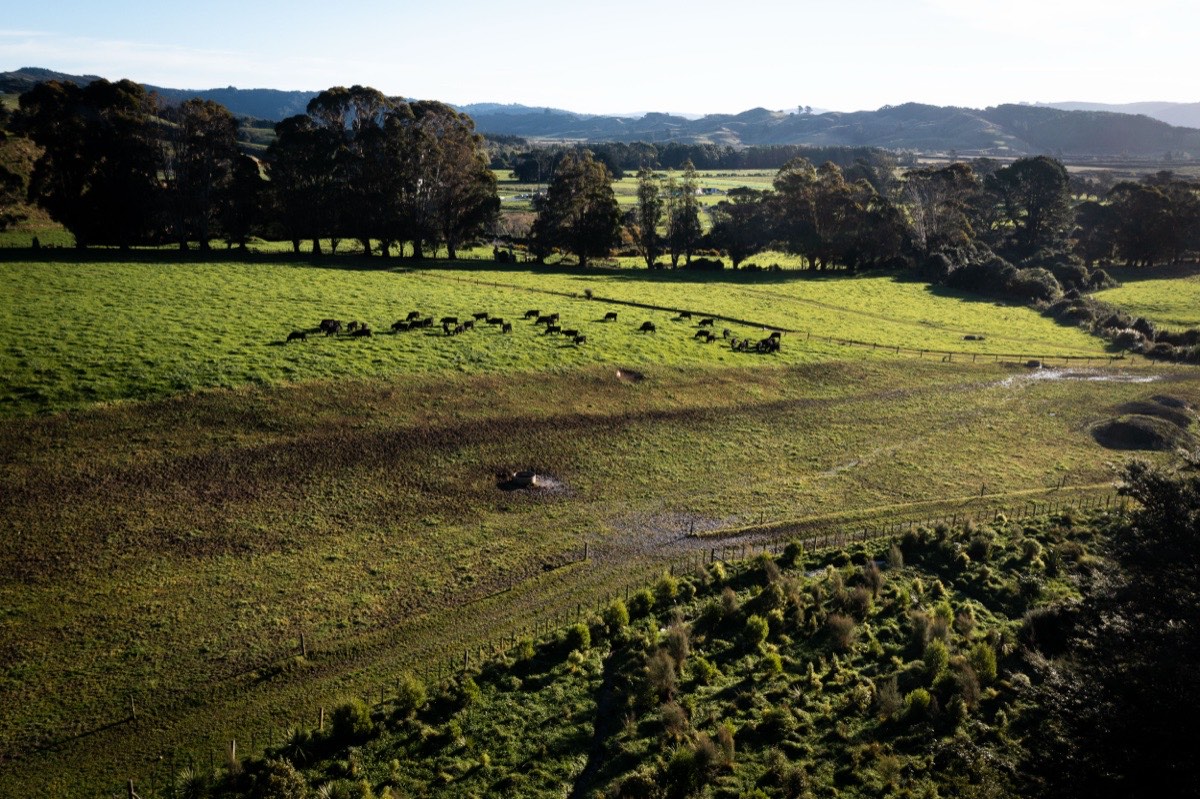
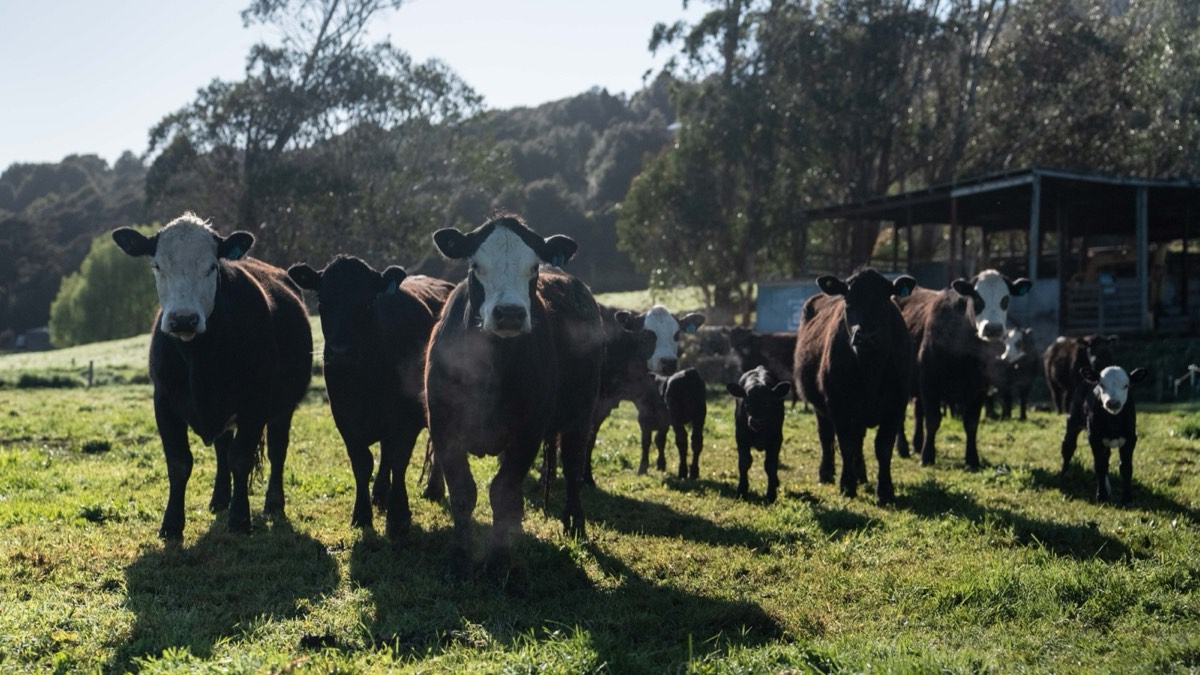
Cattle grazing diverse Mangaroa pasture in the soil-building grazing system

Going deeper

The soil connection.

Ecosystem health starts with the soil. Our animals are part of a greater ecological system — including our underground livestock: soil microbes and the mycelium network. Through adaptive grazing they help rebuild our largest carbon sink.

We work to the five principles of regenerative soil health, tailored to this valley:

  1. Minimise disturbance — no tillage, so soil structure and fungi stay intact.
  2. Keep soil covered — residue and cover crops shield the surface.
  3. Living roots year-round — feeding microbes in every season.
  4. Maximise diversity — diverse plants, diverse soil life, fewer pests.
  5. Integrate livestock — managed grazing cycles nutrients and stimulates regrowth.

Pasture system

Tall grass, standing hay.

We use tall-grass grazing and deferred grazing — letting paddocks grow long, then standing them through winter as standing hay. It's a way of storing feed on the land instead of cutting and wrapping it in plastic.

Hay, baleage and silage are time- and energy-intensive and create plastic waste. We'd rather let the grass do the storing for us.

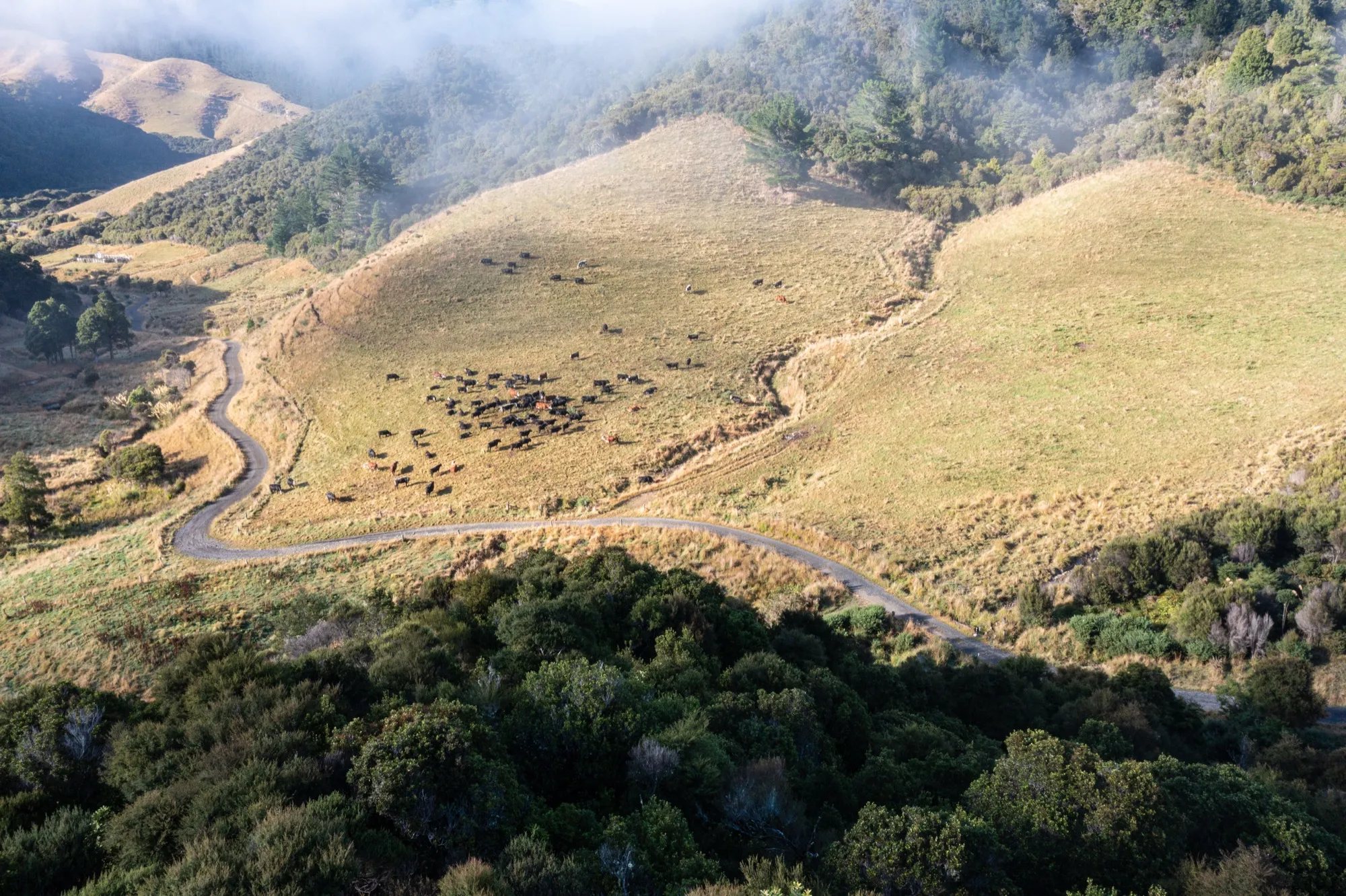
Drone view of Mangaroa paddocks held in tall standing hay for winter feed
Aerial view of Mangaroa Valley pastures and the adaptive grazing system

The technology

Adaptive grazing, on Halter.

Halter collars support our adaptive grazing — solar-powered, GPS-guided virtual fencing that gently steers the herd through small breaks of pasture, then moves them on before the ground is overgrazed.

It mimics the way wild herds once moved: dense impact, long rest. Roots grow deeper, soil holds more water, biodiversity returns — no barbed wire cutting up the valley, and calm cows because the cues are predictable.

Learn more at halterhq.com.

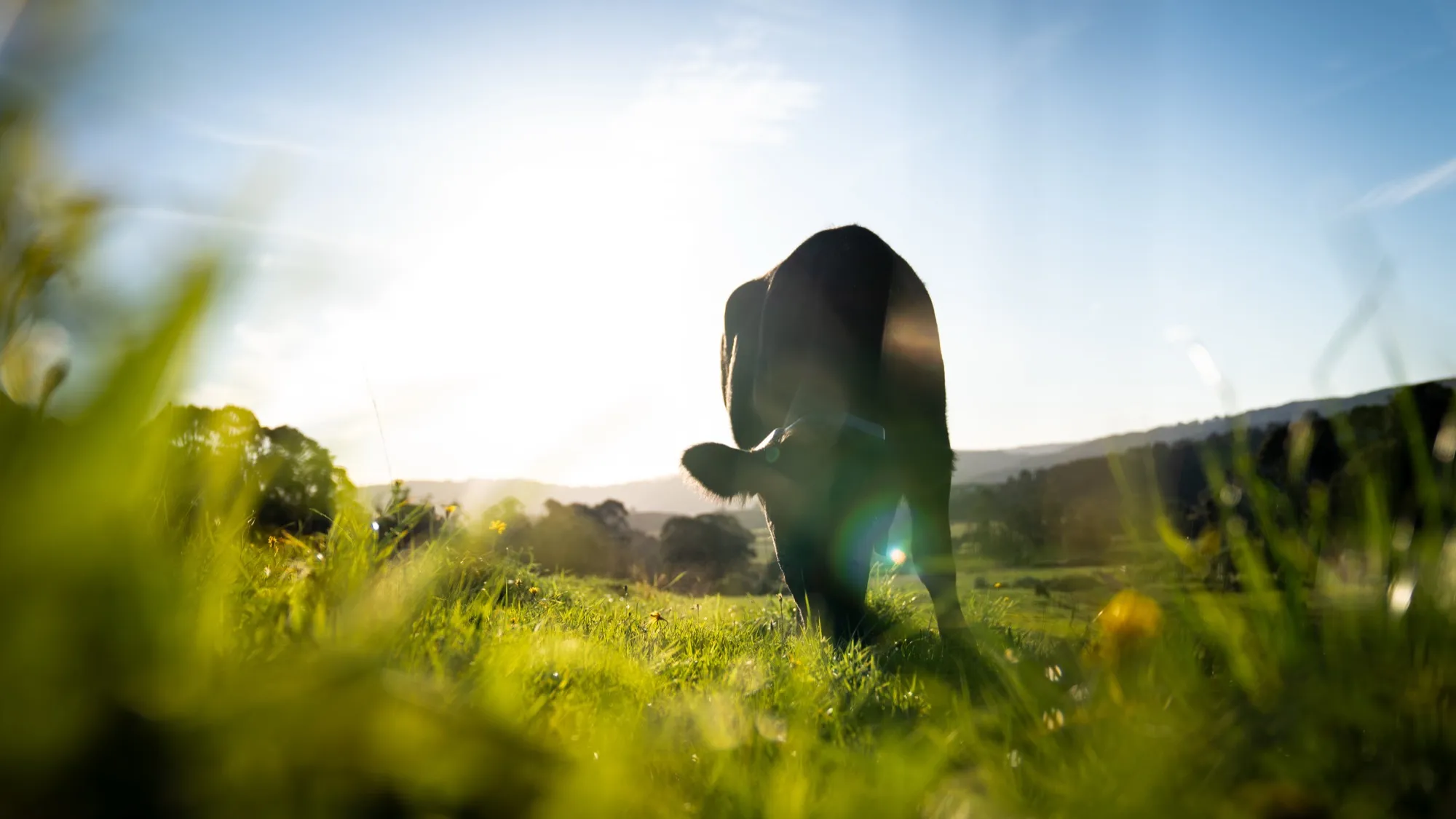
The Mangaroa herd in pasture
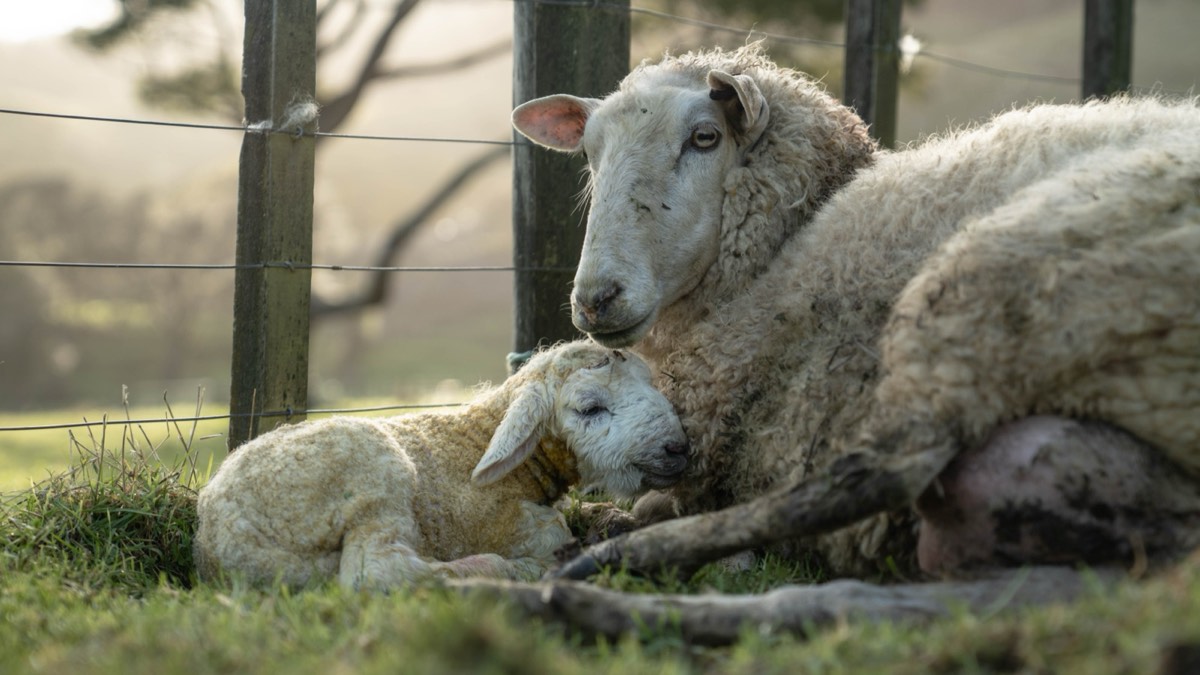
An ewe and her lamb resting in the paddock

The crew

The same hands, paddock to plate.

Jake and Miki Coulston run the farm. Jake's uncle Rob runs the butchery. Locally managed and processed by those who call this place home.

Not a factory. Not a commodity supply chain. Just a small crew on one farm, raising high-quality products in alignment with nature.

What we raise

Beef and lamb, with intent.

Mangaroa Angus cattle grazing on pasture

Beef

Primarily Angus or Angus Cross. We bring cattle in young and butcher at around three years old (~500kg) for consistent carcass weight, deeper flavour and more marbling. Some are finished at 18 months.

Low-stress handling throughout. Fed kelp, salt and mineral mixes alongside our diverse pastures — premium, nutrient-dense meat.

A Mangaroa ewe and her lamb resting on pasture

Lamb

Coopworth ewes crossed with a Suffolk ram for a better eating experience. We only butcher ewe lambs — something that sets us apart from supermarket and export lamb.

Minimal management and low-stress handling at lambing gives lambs the best start. Fed kelp, salt and minerals alongside diverse pasture — tender, ethically raised meat.